Blog 3: The Things You Don’t Notice Until You Leave Home
Bio
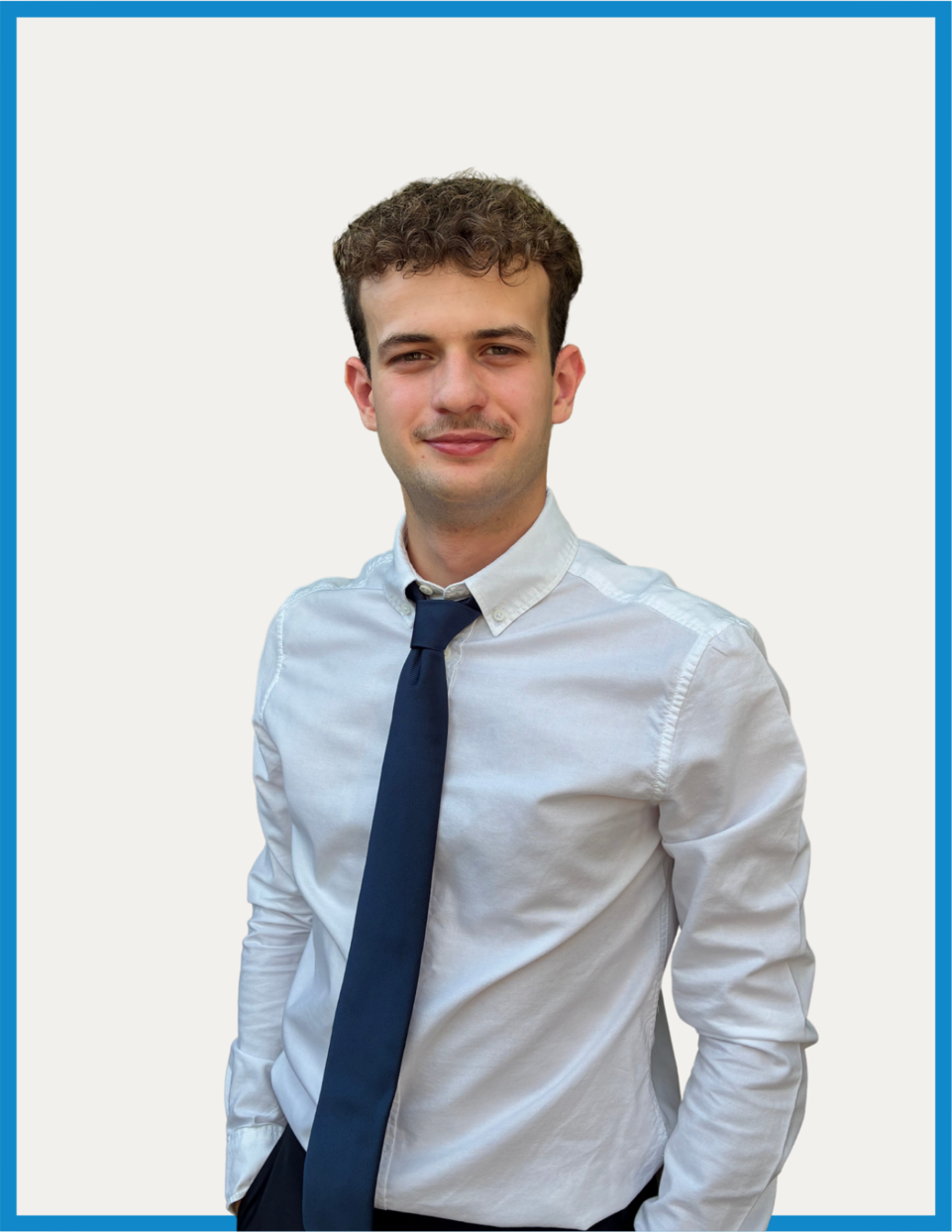
My name is Sidar Yilmaz, and I am an International Relations student from the Netherlands, currently pursuing my degree at Rhine-Waal University of Applied Sciences in Kleve, Germany. This fall, I will join the International Center of the Capital Region (ICCR) and Hudson Valley Community College as an international intern. With family roots in Nijmegen, Albany's sister city, I am excited to experience the Capital Region firsthand while learning more about its history, communities, and international connections. During my internship, I look forward to contributing to ICCR's mission while sharing my experiences and discovering the people, culture, history, and opportunities that make New York's Capital Region unique.
Hi everyone,
Welcome back to my blog! Again, I’m so thrilled to write about my experiences and the vision I will share with you as an international student in the Capital Region of New York.
Currently, I’ve been here for three and a half weeks, so this is the time when you start to feel like your routine is becoming normal, the people you’ve met are not new anymore, and you notice that you start picking up some cultural behaviors along the way. But even though you pick up some of those cultural behaviors, you also get to know the differences and things that are not done here or simply work a bit differently.
Things that I suddenly had to learn, besides the tipping culture and giving your card away to the waiter, include the fact that sales tax is not included in the price tag. This was completely new to me. Every time, I had the feeling that I had just seen the wrong price tag, but surprisingly, sales tax is added at checkout rather than included in the price itself.
Besides that, I also had to learn the systems of Fahrenheit, miles, and ounces, which at home we don’t use. We use Celsius, kilometers, and kilograms. Honestly, I do understand miles and ounces more easily than Fahrenheit, but it’s just a matter of time.
Besides those things I just have to learn, there are also some things that I have noticed are completely normal here but unusual to me. First, the small talk. It does not matter whether you enter a store, pharmacy, or café; the first thing people ask you is: “How are you?” Before I moved here, I saw that as a personal question rather than a greeting. When someone asks you, for example, “How are you?” in the Netherlands, you tell them exactly how you feel. Even if it’s bad, you tell them, since the question in the Netherlands implies that the other person is genuinely interested. In the US, this might be considered weird, since it’s more of a casual greeting rather than an actual interest in how you are doing.
Then we have the other way around: things that are normal for me but are unusual here. Besides the directness that I have, when people, for example, ask about my opinion, this is something that is not always appreciated here. People tend to “sugarcoat” a no, whereas someone from the Netherlands will just say “no.” So, I have to work on that a bit to make sure I don’t sound rude. Besides that, I also noticed that if I see someone eating, my instant instinct is to say “Enjoy!”, or in Dutch, “Smakelijk!” I found out while working and when out with friends that this is something people do not necessarily say here.
Another interesting thing I’ve noticed was when Bonnie, an International Center of the Capital Region (ICCR) member, Dennis, and Noe Noe Ko, an intern at ICCR, were sitting in the car after a day of exploring the Capital Region and beyond. Without even thinking about it, I asked Bonnie, “How old are you?”, without knowing that this could be considered culturally inappropriate in the US. Bonnie explained it very well. She said: “I will answer your question, but don’t ask a woman in the US for her age. It is not considered nice here.”I am convinced that these things are only noticeable if you work, interact, and live in a foreign country. Tourist attractions tell you a lot about, for example, the history, but conversations with locals tell you something about society.
I would also love to make clear that my normal is not right. There is no right or wrong when it comes to what is normal to an individual. This, for example, also does not mean that what is normal for someone from the Netherlands is the same as my normal, or vice versa.
This is what makes people interesting. Maybe have that conversation with your friends and family. Talk about things that are normal to you, and you will find out that there are so many differences that connect us more than they differentiate us.
Now I’m curious: what is something you consider completely normal that might seem unusual to someone from another country?
Stay in touch as we are going to discover the Capital Region of New York together. Feel free to leave a comment on LinkedIn about topics that might be interesting to you.
Sidar