
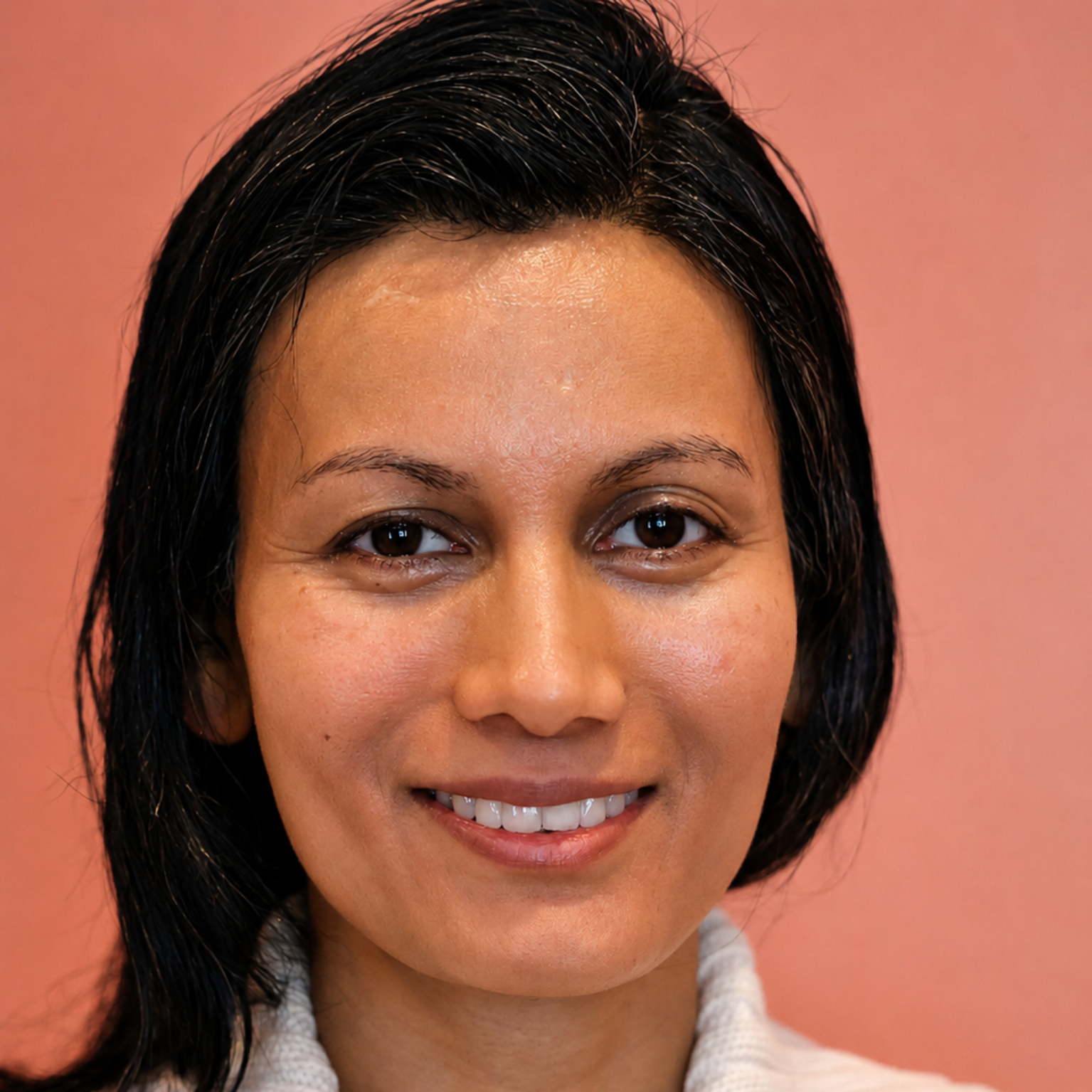
Anshu Chandra
Category 2: Community Service and Philanthropy
Dr. Anshu Chandra is an optometrist, educator, and humanitarian who has spent the past 17 years bringing eye care to underserved communities around the world—people who might otherwise lose their sight simply because they lack access to care.
A graduate of the State University of New York College of Optometry and its Ocular Disease Residency Program, Dr. Chandra serves as the President of the Global Eye Project. She has volunteered in eye care programs across Haiti, India, Nepal, Peru, Lebanon, Tanzania, Honduras, Guatemala, Mexico, the Dominican Republic, and Indonesia.
Since 2013, Haiti has been the primary focus of her volunteer efforts. Recognizing that short-term mission trips alone could not meet the tremendous need, she worked with local partners to establish a full-time eye clinic in Fond-des-Blancs, a remote mountainous region where access to eye care was previously unavailable. Today, the clinic provides comprehensive eye care, trains local eye care professionals, delivers outreach services to remote communities, and has provided more than 139,000 free eye examinations and thousands of sight-saving treatments. Through partnerships with Haitian healthcare institutions, Dr. Chandra has also helped strengthen local capacity through education, training, and mentorship.
This work has truly been a community effort. It's the Capital Region coming together—youth, adults, seniors, business owners, civic organizations, and people from many different faith communities—all putting their hands together to help make this possible. While the impact is in Haiti, it has been driven by the generosity, compassion, and commitment of the Capital Region community.
Raised in both India and the United States, Dr. Chandra was inspired by her mother's work as a social worker serving disadvantaged communities. That example instilled a lifelong belief that quality healthcare should not depend on where a person is born or their ability to pay. Her work continues to be guided by that principle: no one should go blind simply because they lack access to care.